America, 1900–1920
Day 3 — The Automobile Age and the Rising Tide of Reform,
1908–1911
https://fineartamerica.com/featured/1920-ford-model-t-on-rural-road-james-inlow.html?newartwork=true
Introduction: A Country Speeding Into the Future
By 1908, America was changing at a remarkable pace.
The horse still dominated American streets, but the automobile was beginning to challenge it.
Factories were becoming more efficient. Advertising was reaching millions of people. Department stores were changing shopping. Telephones were connecting households and businesses. Motion pictures were attracting growing audiences.
At the same time, Americans were increasingly questioning whether the nation’s political and economic systems were keeping pace with industrialization.
Who should control the great corporations?
How should workers be protected?
Should women have the right to vote?
How should the nation deal with racial discrimination?
How much should the federal government regulate business?
And what responsibilities did America have as its international influence grew?
From 1908 through 1911, these questions became increasingly difficult to ignore.
Chapter 1
Henry Ford and the Model T
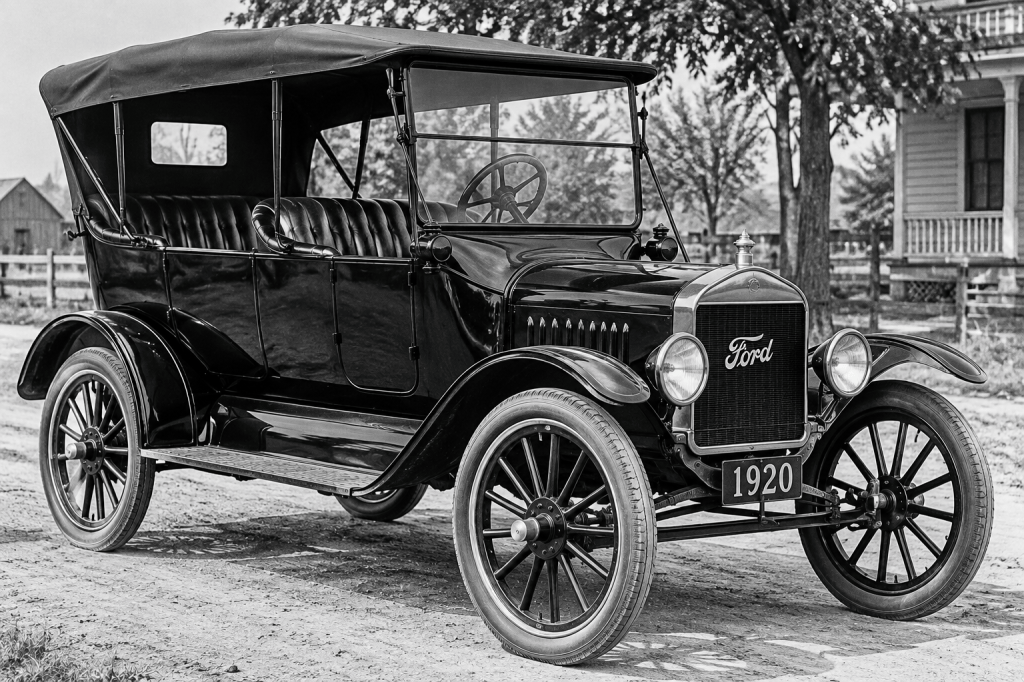
In October 1908, the Ford Motor Company introduced the Model T.
The automobile was not new. Numerous companies were already producing cars.
What made the Model T revolutionary was the combination of simplicity, durability, and Ford’s developing system of mass production.
Ford wanted automobiles to become affordable to a much larger portion of the population.
The automobile would eventually change almost everything:
- Where Americans lived
- How they traveled
- Where they worked
- How businesses delivered goods
- How roads were constructed
- How communities developed
- How Americans spent their leisure time
At first, owning a car was still beyond the reach of many families.
But the direction was clear.
America was beginning its transformation from a railroad-and-horse society into an automobile society.
Chapter 2
Mass Production
The automobile was part of a much larger industrial revolution.
American factories increasingly sought ways to manufacture products faster and more efficiently.
Instead of having one skilled worker construct an entire product, manufacturing could be divided into a series of specialized tasks.
This approach increased production and reduced costs.
The full moving assembly line would become closely associated with Ford in the years ahead, but the ideas behind mass production were already transforming American manufacturing.
The result was a new possibility:
Products that had once been expensive luxuries could eventually become affordable to millions of ordinary Americans.
This would help create the modern consumer economy.
Chapter 3
Theodore Roosevelt Leaves the White House
Theodore Roosevelt remained one of the most influential figures in American politics as he approached the end of his presidency.
In 1908, Roosevelt decided not to seek another term.
His chosen successor was William Howard Taft.
Taft had served as Roosevelt’s secretary of war and had extensive experience in government.
The election of 1908 brought Taft to the presidency.
On March 4, 1909, William Howard Taft was inaugurated as the nation’s twenty-seventh president. (Library of Congress Guides)
Roosevelt left office with a reputation as an energetic president who had expanded the visibility and power of the presidency.
But the relationship between Roosevelt and Taft would eventually become one of the most important political stories of the next few years.
Chapter 4
William Howard Taft
Taft entered the White House with a background very different from Roosevelt’s.
He had been a judge, solicitor general, governor-general of the Philippines, and secretary of war before becoming president. (Library of Congress Guides)
Taft generally favored a more legalistic approach to government than Roosevelt.
His administration continued some Progressive-era policies, including antitrust enforcement.
But disagreements developed among Republicans over tariffs, conservation, and the direction of reform.
The Progressive movement itself was becoming divided.
Some reformers wanted government to take a larger role in regulating the economy.
Others were concerned about government power and spending.
The debates surrounding Taft’s administration would contribute to the political struggles that followed.
Chapter 5
The Sixteenth Amendment
One of the important constitutional developments during Taft’s presidency concerned federal taxation.
The Sixteenth Amendment was proposed in 1909.
It authorized Congress to impose a federal income tax without apportioning it among the states according to population.
The amendment was ratified in 1913.
Although the income tax would become an important part of the federal government’s finances, its origins belonged to this period of Progressive reform.
Americans were debating how a modern industrial nation should finance its government.
The question was becoming increasingly important as federal responsibilities expanded.
Chapter 6
The Birth of the NAACP
Race relations remained one of the nation’s most serious problems.
In 1908, a violent race riot in Springfield, Illinois, Abraham Lincoln’s hometown, shocked many Americans.
The violence became one of the events that helped inspire the creation of a new national civil rights organization.
On February 12, 1909, the National Association for the Advancement of Colored People, or NAACP, was founded.
Among the people associated with its founding were W. E. B. Du Bois, Ida B. Wells-Barnett, Mary Church Terrell, Mary White Ovington, and others. (NAACP)
The organization sought to challenge racial discrimination and secure constitutional rights for African Americans.
The NAACP established a national office in New York City in 1910, and Du Bois became director of publications and research. (NAACP)
The organization would become one of the most important civil rights institutions in American history.
Chapter 7
African American Life in the Early 1900s
The creation of the NAACP was part of a larger effort by African Americans to strengthen their communities and challenge discrimination.
Black Americans established schools, colleges, newspapers, churches, businesses, fraternal organizations, and civic associations.
The Great Migration northward was beginning to accelerate, although the largest movement would occur later.
Northern cities offered opportunities that were generally unavailable in the segregated South, but racial discrimination also existed in northern communities.
African Americans confronted barriers in housing, employment, education, voting, and public accommodations.
The struggle for equality was taking place at many levels—from national organizations to local communities.
Chapter 8
Women Demand the Vote
The women’s suffrage movement was becoming increasingly visible.
Women had campaigned for voting rights for generations, but the movement was taking on new energy.
Suffragists organized marches, meetings, speeches, publications, petitions, and demonstrations.
They argued that women should have a direct voice in government.
The movement included women from different political and social backgrounds.
Some focused on the principle of equal citizenship.
Others connected suffrage with Progressive reforms involving public health, education, child welfare, labor conditions, and temperance.
The campaign was gaining national attention.
Yet the constitutional amendment guaranteeing women voting rights nationwide was still years away.
Chapter 9
The New Woman
The early twentieth century was also changing expectations about women’s lives.
More women were attending high school and college.
Women increasingly entered professions such as teaching, nursing, clerical work, journalism, social work, and office employment.
Young women living in cities sometimes enjoyed greater independence than their mothers had experienced.
Department stores employed large numbers of women.
Telephone companies employed women as telephone operators.
Office work created new opportunities for women to earn wages outside the home.
But women continued to face lower wages, limited career opportunities, and social expectations that emphasized marriage and domestic responsibilities.
The definition of what a woman could do was gradually changing.
Chapter 10
The Growth of the Motion Picture
Movies were becoming a major form of entertainment.
Early audiences watched films in small theaters and storefronts.
As the industry developed, larger movie houses appeared.
Motion pictures offered something theater could not easily provide:
Stories could be shown visually to enormous audiences.
Audiences watched comedies, dramas, westerns, news events, travel scenes, and historical subjects.
Film stars were beginning to emerge.
The motion-picture industry would eventually become one of America’s most important cultural exports.
In 1908–1911, however, the industry was still in its formative years.
Chapter 11
Aviation Takes Flight
The Wright brothers had demonstrated powered flight in 1903.
Within a few years, aviation was developing rapidly.
Air shows attracted crowds.
Inventors and pilots experimented with improved aircraft.
In 1909, the first major international air meets demonstrated the possibilities of aviation to enthusiastic audiences.
The airplane was still dangerous and unreliable, but it had captured the imagination of the public.
Americans were beginning to realize that the sky could become another avenue of transportation.
The aviation industry had been born.
Chapter 12
Cities Continue to Grow
Urban America continued expanding.
Skyscrapers changed skylines.
Streetcars carried commuters.
Elevated railways and subways made it possible for workers to travel farther from their workplaces.
Factories attracted immigrants and rural migrants.
Neighborhoods developed around ethnic, religious, and occupational communities.
Cities offered theaters, restaurants, department stores, libraries, museums, parks, and amusement parks.
But urban growth also created serious problems.
Housing could be overcrowded.
Factories produced smoke and pollution.
Streets were crowded with pedestrians, streetcars, wagons, bicycles, and increasingly automobiles.
Municipal governments faced enormous challenges.
The modern city was developing faster than many city governments could adapt.
Chapter 13
The Automobile Changes the Street
In 1900, streets had been dominated by horses.
By 1911, automobiles were becoming an increasingly familiar sight.
The change was gradual but significant.
Cars required better roads.
They also created new problems.
Traffic accidents increased.
Cities began developing traffic rules and experimenting with ways to regulate automobiles.
Gasoline stations became more common.
Repair shops appeared.
Road construction became an increasingly important public issue.
The automobile was not simply a new machine.
It was creating an entirely new infrastructure.
Chapter 14
Rural America and the Telephone
Modernization was not limited to cities.
Telephones were gradually spreading into rural communities.
For farmers, a telephone could provide contact with neighbors, doctors, merchants, banks, and distant relatives.
Rural telephone lines were often shared by several families.
The telephone became both a practical tool and a social connection.
Other technologies were also reaching farms.
New agricultural machinery increased productivity and reduced some forms of manual labor.
Yet rural life remained physically demanding.
Many farm families still relied heavily on horses, manual labor, and seasonal work.
America was modernizing unevenly.
Chapter 15
Labor Organizes
Industrial workers continued to push for better working conditions.
The labor movement included many different unions and organizations.
Workers demanded:
- Higher wages
- Shorter hours
- Safer workplaces
- Recognition of unions
- Compensation for injuries
- Greater control over working conditions
Women workers became increasingly active in labor organizing.
In the garment industry, immigrant women played an especially important role.
The struggle between labor and management sometimes resulted in strikes and violent confrontations.
These conflicts increasingly attracted public attention.
Chapter 16
The Garment Industry
New York City’s garment industry employed thousands of workers.
Many were young immigrant women.
They worked long hours producing clothing for America’s growing consumer market.
Factories and sweatshops could be crowded and poorly ventilated.
Workers faced low wages and limited protections.
The conditions helped inspire labor organizing and reform campaigns.
The garment industry would soon become the setting for one of the most tragic industrial disasters in American history.
Chapter 17
The Triangle Shirtwaist Factory
On March 25, 1911, a fire broke out at the Triangle Shirtwaist Factory in New York City.
The factory occupied the eighth, ninth, and tenth floors of the Asch Building.
Many workers were young immigrant women.
The fire spread rapidly.
Some exits were inaccessible or locked, and workers struggled to escape.
People outside watched in horror as workers attempted to flee the burning building.
Some jumped from upper floors.
When the fire was over, 146 workers had died. (Library of Congress Guides)
The tragedy shocked New York and the nation.
It became a powerful symbol of the dangers faced by industrial workers.
Chapter 18
The Aftermath of the Triangle Fire
The Triangle tragedy generated widespread demands for better workplace safety.
Investigations examined building conditions, fire escapes, exits, factory regulations, and workplace practices.
The disaster contributed to a major expansion of factory safety reform in New York.
Labor organizations gained additional public attention.
The tragedy also demonstrated the connection between immigration, working-class life, women’s employment, and industrial reform.
For many Americans, the fire represented the human cost of rapid industrialization.
The event would influence workplace safety legislation for years to come. (whitehouse.gov)
Chapter 19
The Progressive Era in Everyday Life
Progressive reform was not simply something happening in Washington.
It could be seen in everyday communities.
Reformers worked to improve:
- Drinking water
- Sewage systems
- Garbage collection
- Public schools
- Housing
- Food safety
- Factory conditions
- Children’s welfare
- Public parks
- Libraries
- Hospitals
Cities created new departments and regulations.
Reformers believed scientific methods and professional expertise could help solve problems that had previously been ignored.
The Progressive Era was increasingly transforming the relationship between government and society.
Chapter 20
A New American Consumer
Mass production and advertising were creating a new kind of consumer.
Americans increasingly purchased manufactured products rather than making everything themselves.
Clothing, packaged foods, household goods, furniture, automobiles, and entertainment became major parts of the economy.
Advertising encouraged consumers to associate products with modern living.
Brand names became increasingly important.
The rise of consumer culture also created a new aspiration:
A modern American home filled with modern products.
The transformation would accelerate dramatically over the next decade.
Chapter 21
The Nation on the Eve of 1912
By the end of 1911, America had changed enormously since the beginning of the century.
The automobile was becoming increasingly important.
Factories were embracing mass production.
Cities were growing.
Motion pictures were expanding.
Aviation had moved beyond the experimental stage.
Women were demanding political equality.
African Americans were organizing nationally against discrimination.
Workers were demanding greater protection.
Progressives were pushing government toward a larger role in regulating industrial society.
And the political world was becoming increasingly divided over what direction the country should take.
The disagreements between Theodore Roosevelt and President William Howard Taft were becoming increasingly important.
The presidential election of 1912 was approaching.
The political conflict of the Progressive Era was about to enter a dramatic new chapter.
Timeline: 1908–1911
1908
- The Ford Model T is introduced.
- William Howard Taft is elected president.
- A major race riot occurs in Springfield, Illinois.
- Aviation and automobile technology continue developing rapidly.
1909
- William Howard Taft is inaugurated as president.
- The NAACP is founded.
- The Sixteenth Amendment is proposed.
- Progressive reform movements continue expanding.
1910
- The NAACP establishes its national office in New York City.
- The organization begins developing a national program of civil rights advocacy.
- Women’s suffrage campaigns become increasingly visible.
- The automobile continues spreading through American communities.
1911
- The Triangle Shirtwaist Factory fire kills 146 workers in New York City.
- The disaster contributes to increased attention to factory safety and labor reform.
- Progressive reform continues gaining influence.
- Political disagreements within the Republican Party intensify.
America in 1911
Imagine standing on a New York City street in 1911.
Horse-drawn wagons move through the traffic.
Streetcars clang along their tracks.
An automobile passes by.
A newspaper boy shouts the latest headlines.
A telephone rings inside an office.
Electric lights illuminate storefronts.
Immigrants hurry to work.
A department store displays the latest fashions.
A movie theater attracts an evening crowd.
High above the street, factory workers labor in crowded rooms.
It is a world that would seem both familiar and strange to us.
The modern age was taking shape all around them.
But progress had a price.
Industrial accidents, dangerous workplaces, poverty, discrimination, political corruption, and inequality remained major problems.
Americans were beginning to ask whether the benefits of modern civilization should come with greater protections and responsibilities.
Those questions would dominate the years ahead.
Looking Ahead: Part 4 — 1912–1915
The next chapter will bring the story to one of the most dramatic periods of the Progressive Era.
We will explore:
- The election of 1912
- Theodore Roosevelt’s return to national politics
- Woodrow Wilson’s presidency
- The Progressive Party
- Women’s suffrage campaigns
- The Federal Reserve
- The Clayton Antitrust Act
- The opening of the Panama Canal
- The growth of the automobile
- The continuing transformation of American cities
- The beginning of World War I in Europe
- America’s initial response to the war
- The changing role of immigrants
- American popular culture before the United States entered the war
By 1915, the world that had entered the twentieth century in 1900 would be almost unrecognizable.
And an even greater transformation was approaching.


Leave a comment