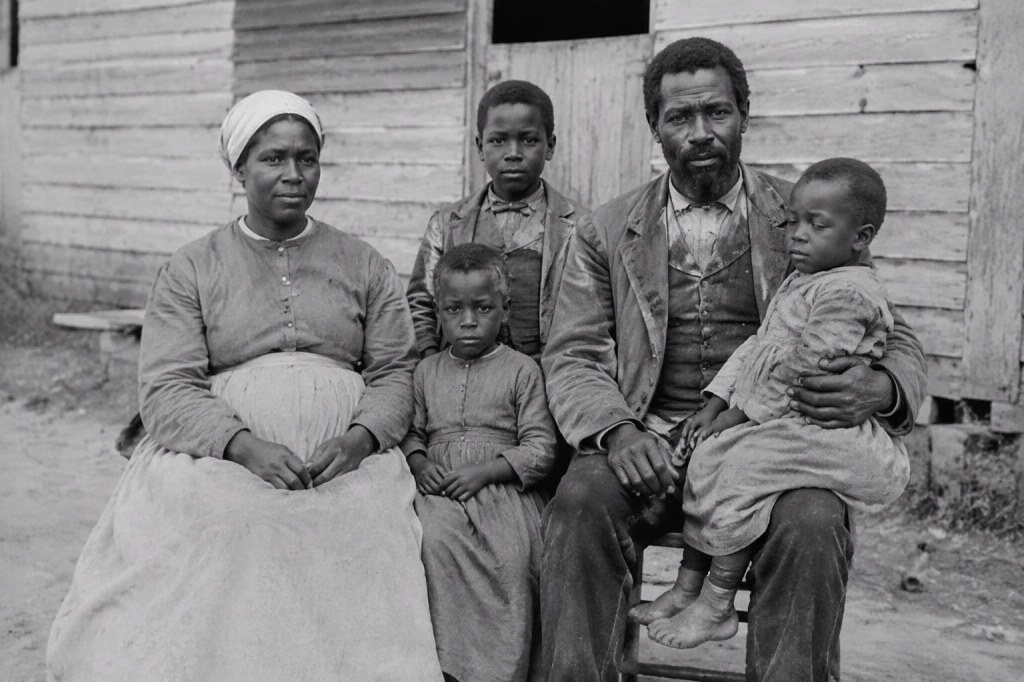
Life After the Civil War: America Rebuilds and Changes, 1865–1900
When the Civil War ended in 1865, the United States entered a period of enormous change. The nation had survived its greatest crisis, but rebuilding would prove almost as difficult as winning the war.
For millions of Americans, life after the war meant starting over.
🏠 Rebuilding a Nation
Across the South, towns, farms, railroads, and businesses had been damaged or destroyed. Families returned home to find their communities transformed. Former Confederate soldiers had to adjust to life after defeat, while formerly enslaved people faced the enormous challenge of building independent lives.
The period known as Reconstruction brought major political and social changes. The 13th Amendment abolished slavery, while the 14th and 15th Amendments established constitutional protections and voting rights for African American men.
But freedom did not immediately mean equality. Southern states adopted discriminatory laws, racial violence increased, and organizations such as the Ku Klux Klan used intimidation and terror against Black Americans and their allies.
🚂 America Begins to Move
Meanwhile, the country was changing rapidly.
Railroads expanded across the continent, connecting farms, towns, and cities. In 1869, the completion of the transcontinental railroad created a continuous rail connection between the eastern and western United States.
Travel that once took weeks or months could increasingly be measured in days.
Railroads also helped create national markets. Farmers could ship crops farther, factories could distribute goods across the country, and western communities grew around railroad lines.
🏭 The Rise of Industry
Between 1865 and 1900, the United States experienced extraordinary industrial growth.
Factories became larger, cities expanded, and new technologies transformed everyday life. Steel production, oil refining, electrical power, and mass manufacturing became increasingly important.
Inventors and entrepreneurs introduced technologies that would reshape American life, including practical electric lighting, improved telephones, elevators, automobiles, and motion-picture technology.
For workers, however, industrialization often meant long hours, low wages, dangerous workplaces, and little job security.
Labor unions began organizing workers who wanted better pay and working conditions. Strikes and labor conflicts became increasingly common.
🏙️ Cities Get Bigger
America became increasingly urban.
People moved from rural areas to cities looking for jobs, while millions of immigrants arrived from Europe seeking new opportunities. New York, Chicago, Boston, Philadelphia, and other cities grew dramatically.
But rapid growth brought serious problems.
Crowded tenements, poor sanitation, pollution, disease, and poverty became major urban concerns. At the same time, cities developed department stores, public transportation, theaters, newspapers, restaurants, libraries, and other institutions that would become familiar features of modern life.
🌾 Life in Rural America
Not everyone moved to the cities.
Millions of Americans continued to work on farms. Western settlement accelerated, and the federal government encouraged migration onto lands that had long been inhabited by Native American peoples.
The expansion of railroads and settlement brought devastating consequences for Native American nations. Military conflicts, forced removals, broken treaties, and the destruction of traditional economies—including the near-extermination of the buffalo—fundamentally changed Indigenous life.
📚 A Changing Society
Education and literacy expanded during these decades. Newspapers became increasingly influential, and inexpensive books and magazines brought information and entertainment to a growing audience.
Women continued to campaign for greater rights, including the right to vote. The women’s suffrage movement became increasingly organized, although nationwide voting rights for women would not be achieved until 1920.
African Americans also built schools, churches, businesses, newspapers, and civic organizations despite widespread discrimination and racial violence.
🇺🇸 America in 1900
By 1900, the United States looked very different from the country that had emerged from the Civil War.
The nation had transformed from a largely agricultural society into an increasingly industrial and urban one. Railroads crossed the continent. Factories filled growing cities. Millions of immigrants had arrived. New technologies were changing how Americans worked, traveled, communicated, and lived.
Yet many of the country’s deepest problems remained unresolved.
The struggle over race and equality continued. Workers demanded greater rights. Women continued their fight for suffrage. Native American communities faced enormous losses of land and sovereignty. Poverty and inequality remained widespread.
The years from 1865 to 1900 were therefore more than simply a period of rebuilding.
LThey were the beginning of modern America—a time when the country grew rapidly, experienced tremendous technological and economic change, and confronted many of the social conflicts that would shape the twentieth century.


Leave a comment