Theodore Roosevelt: The Life and Times of an American Original
Introduction
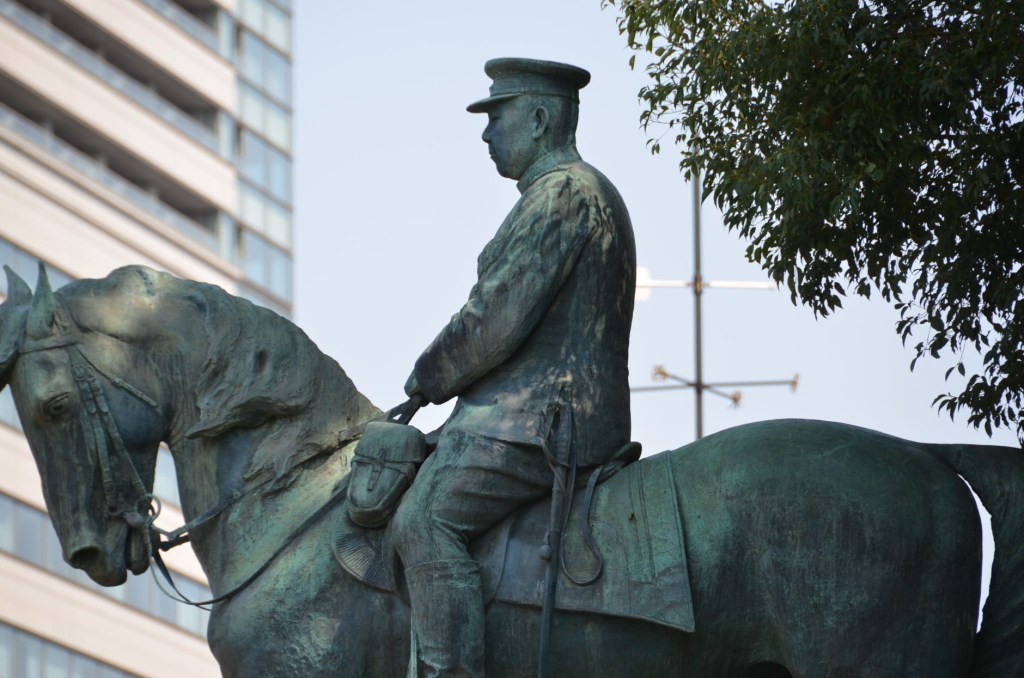
Few Americans left as distinctive a mark on the United States as Theodore Roosevelt. Soldier, rancher, author, conservationist, reformer, politician, and president, Roosevelt lived during a period when America was transforming from a largely agricultural nation into an industrial and global power.
His life spanned some of the most dramatic changes in American history. He witnessed the aftermath of the Civil War, the rise of massive corporations, waves of immigration, the closing of the American frontier, the growth of cities, the emergence of the United States as a world power, and the country’s entry into the modern age.
Roosevelt was energetic, ambitious, outspoken, and frequently controversial. He believed that government had a responsibility to serve the public interest, yet he also championed military preparedness and an assertive American role abroad. His presidency expanded the influence of the federal government and helped establish conservation as a major national responsibility.
To understand Theodore Roosevelt is therefore to understand much of America between the Civil War and World War I.
Chapter 1: A Child of New York
Theodore Roosevelt was born on October 27, 1858, in New York City.
He was the second of four children born to Theodore Roosevelt Sr. and Martha “Mittie” Bulloch Roosevelt. His father was a successful businessman and philanthropist, while his mother came from a wealthy Southern family.
The Roosevelt household was comfortable, but young Theodore was not a naturally robust child.
He suffered from severe asthma and other illnesses. His physical limitations could have defined his childhood, but Roosevelt’s response was characteristic of the man he would become.
His father encouraged him to strengthen his body through exercise.
Roosevelt later recalled his father’s advice:
“Theodore, you have the mind, but you have not the body.”
The young Roosevelt took the challenge seriously.
He exercised, boxed, hiked, rode horses, and developed a lifelong enthusiasm for physical fitness and outdoor activity.
This determination became one of the central themes of his life: the belief that character could be developed through effort and perseverance.
Chapter 2: A Young Man of Extraordinary Curiosity
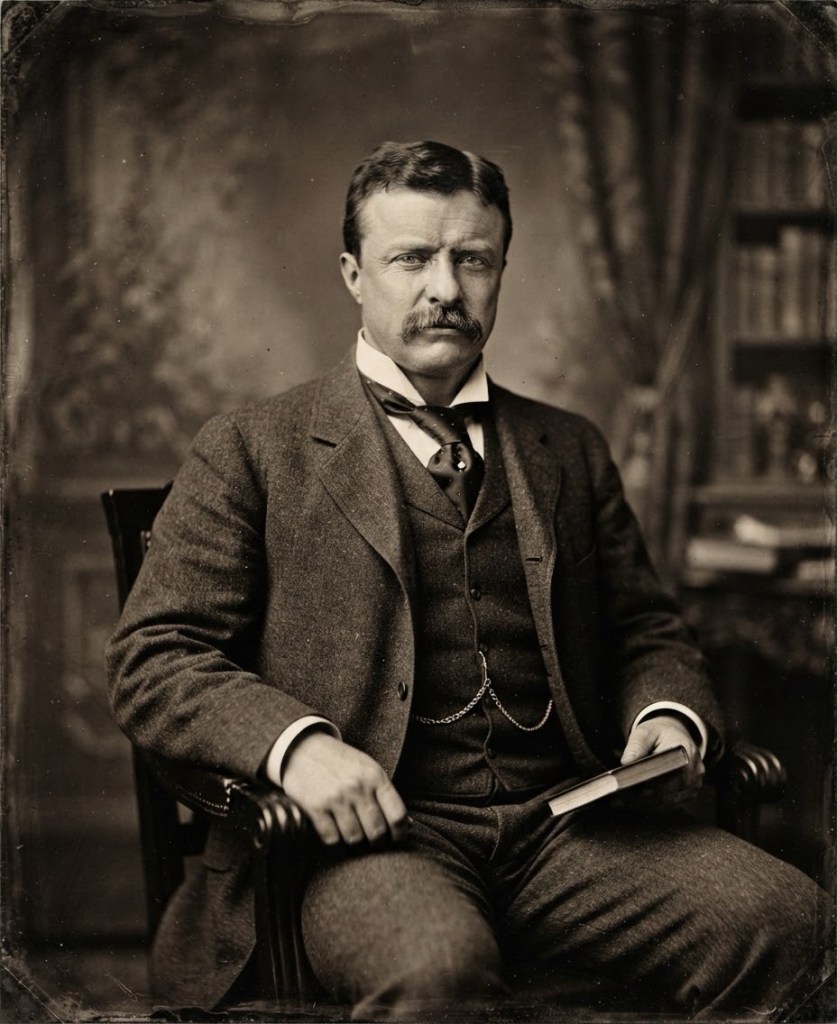
https://earths-bounty.printify.me/product/32328839
Roosevelt was educated largely at home during his early years.
He developed an enormous appetite for reading and learning. His interests included history, natural science, geography, military affairs, politics, and literature.
He eventually entered Harvard College in 1876.
At Harvard, Roosevelt excelled academically while continuing his interest in physical activity and natural history.
His personal life was transformed by tragedy during his final year.
On February 14, 1884, his mother died of typhoid fever.
Only hours later, his first wife, Alice Hathaway Lee Roosevelt, died from complications following childbirth.
Roosevelt was devastated.
In his diary that day, he wrote the haunting words:
“The light has gone out of my life.”
He withdrew from New York society and traveled west.
Chapter 3: The Badlands and the Cowboy
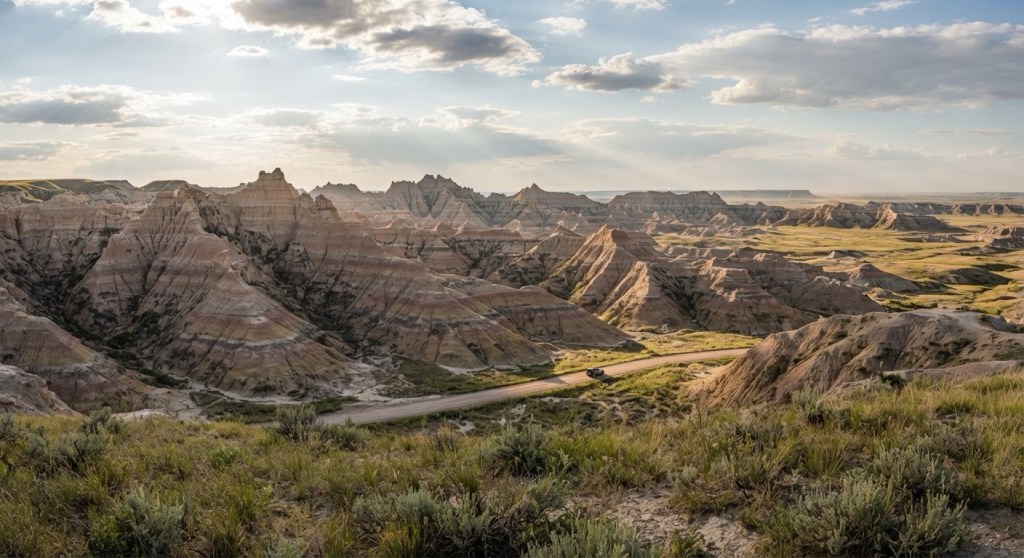
Roosevelt had already developed an interest in the American West.
Following his personal tragedies, he spent considerable time in the Dakota Territory, where he became a rancher.
He purchased land and established ranches near the Little Missouri River.
The experience profoundly influenced him.
Roosevelt hunted, rode horses, endured harsh winters, and worked alongside cowboys and ranch hands.
The West became more than a place to escape his grief. It became part of his identity.
He later wrote extensively about his experiences, helping create the popular image of the rugged Western American.
Yet Roosevelt was not simply playing cowboy.
He was also learning about leadership, self-reliance, discipline, and the realities of life on the frontier.
His years in the Dakota Badlands helped shape the personality that Americans would later associate with him.
Chapter 4: Return to New York and the Rise of a Politician
Roosevelt eventually returned to New York.
He entered politics as a member of the Republican Party and was elected to the New York State Assembly in 1881.
He quickly established himself as an unusually energetic reformer.
At a time when political machines exercised enormous influence, Roosevelt argued that government should operate more honestly and efficiently.
He became increasingly interested in civil service reform and opposition to political corruption.
But Roosevelt was also ambitious.
He wanted to influence national affairs, not simply reform his home state.
His political career would eventually take him from New York City to Washington and ultimately to the White House.
Chapter 5: The Historian
Roosevelt was more than a politician.
He was a prolific writer.
He wrote books about American history, military history, politics, hunting, and his experiences in the West.
His work The Naval War of 1812, published in 1889, established his reputation as a serious historian.
He believed that history provided lessons for the present.
Roosevelt’s writing also reflected his philosophy of leadership.
He admired individuals who demonstrated courage, perseverance, discipline, and a willingness to accept responsibility.
These ideas would become central to his political career.
Chapter 6: The Civil Service Reformer
In 1889, President Benjamin Harrison appointed Roosevelt to the United States Civil Service Commission.
Roosevelt took the position seriously.
He pushed for enforcement of civil service rules and opposed the traditional practice of awarding government jobs primarily through political connections.
His aggressive approach earned him enemies.
Nevertheless, the experience strengthened his reputation as a reformer willing to challenge powerful political interests.
Roosevelt was developing a political identity that did not fit neatly into the traditional divisions of his party.
He remained a Republican, but he increasingly believed that government needed to respond to the problems created by industrialization.
Chapter 7: The New York Police Department
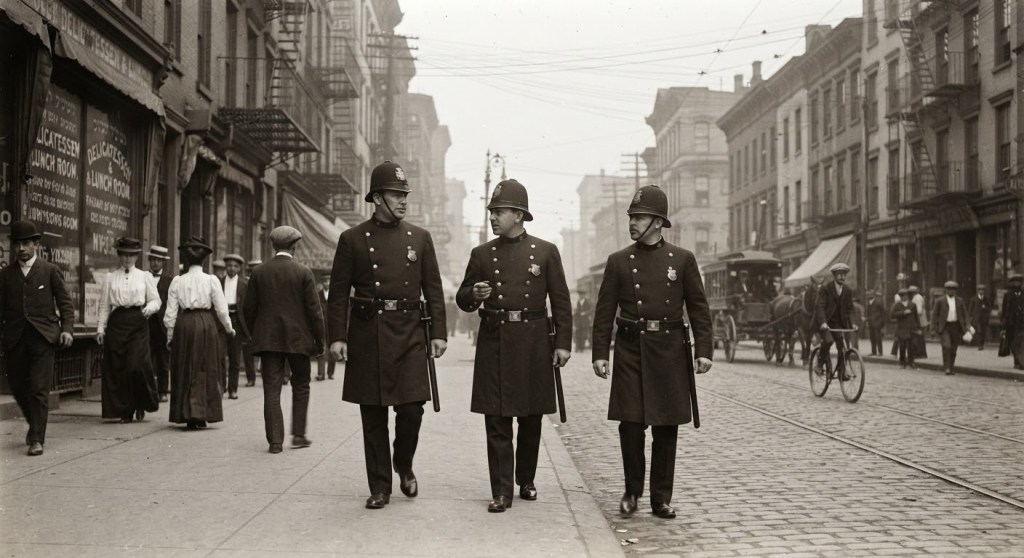
In 1895, Roosevelt became president of the New York City Board of Police Commissioners.
New York’s police department was widely criticized for corruption and political influence.
Roosevelt attempted to impose stricter standards.
He inspected police stations personally, enforced regulations, and pushed for greater professionalism.
His willingness to confront established practices made him a highly visible public figure.
Roosevelt was developing a reputation for doing things personally rather than simply issuing orders.
That characteristic would follow him throughout his career.
Chapter 8: Assistant Secretary of the Navy
Roosevelt next entered the federal government as Assistant Secretary of the Navy under President William McKinley.
He believed that the United States needed a modern and powerful navy.
During the late nineteenth century, America was becoming increasingly involved in international affairs.
Roosevelt believed military preparedness was essential.
When tensions between the United States and Spain increased in the late 1890s, Roosevelt strongly supported preparation for war.
In 1898, the Spanish-American War began.
Roosevelt resigned his government position and volunteered for military service.
Chapter 9: The Rough Riders
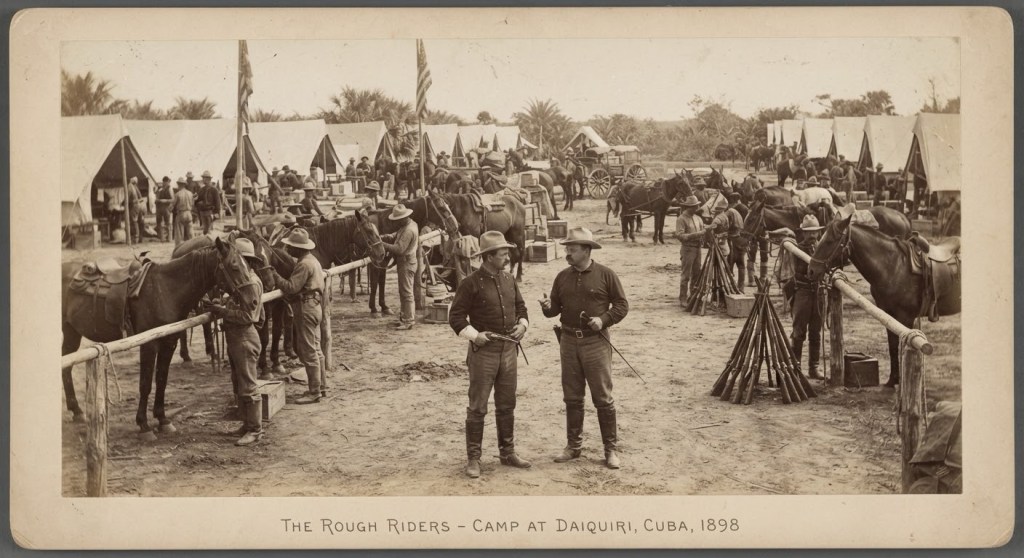
Roosevelt helped organize the 1st United States Volunteer Cavalry, popularly known as the Rough Riders.
The unit contained a remarkable mixture of soldiers.
There were Western cowboys, athletes, adventurers, miners, Native Americans, college students, and experienced soldiers.
Roosevelt became their lieutenant colonel.
The Rough Riders participated in the campaign in Cuba.
Their most famous engagement occurred during the fighting around San Juan Hill.
Roosevelt personally led his men forward.
The battle made him a national hero.
Newspapers celebrated his courage, and the Rough Riders became famous throughout the country.
Roosevelt’s military reputation transformed his political career.
He returned to America as one of the nation’s most recognizable public figures.
Chapter 10: Governor of New York
Roosevelt was elected governor of New York in 1898.
As governor, he continued his reform efforts.
He supported measures involving taxation, government administration, labor conditions, and regulation of corporations.
His approach worried some members of the Republican establishment.
They considered him unpredictable and difficult to control.
Political leaders eventually decided that placing Roosevelt on the national ticket as vice president might be a way to move him away from New York politics.
It was a decision that would dramatically change American history.
Chapter 11: Vice President of the United States
In 1900, William McKinley was reelected president, with Roosevelt as his vice president.
Roosevelt was only 42 years old.
The vice presidency, however, offered him little opportunity to exercise power.
He spent much of his time traveling and speaking.
Then, in September 1901, everything changed.
Chapter 12: The Assassination of William McKinley
On September 5, 1901, President McKinley was shot by an assassin at the Pan-American Exposition in Buffalo, New York.
Roosevelt was on vacation in the Adirondack Mountains when news arrived that McKinley’s condition had worsened.
McKinley died on September 14, 1901.
Theodore Roosevelt became president.
At 42, he was the youngest person to become president of the United States up to that time.
The United States had entered a new era.
Chapter 13: The Roosevelt Presidency
Roosevelt’s presidency lasted from 1901 to 1909.
He transformed the role of the presidency.
Earlier presidents had often viewed the federal government more narrowly.
Roosevelt believed the president should actively use the powers of the office to address national problems.
He became one of the most energetic presidents in American history.
His administration focused on:
- Corporate regulation
- Consumer protection
- Conservation
- Labor disputes
- Federal power
- Railroad regulation
- Foreign policy
- Military preparedness
Roosevelt called his domestic program the Square Deal.
The phrase represented his belief that the government should seek fairness among competing interests.
Chapter 14: Roosevelt and Big Business
The United States was experiencing enormous industrial growth.
Huge corporations dominated industries such as oil, steel, railroads, and finance.
Some corporations had become so powerful that many Americans feared they could influence government itself.
Roosevelt did not oppose all large corporations.
Instead, he argued that corporations should operate within rules established by the government.
His administration used federal authority against certain corporate practices it considered harmful to competition and the public interest.
The most famous example was the government’s case against Northern Securities Company, a railroad holding company.
The Supreme Court eventually ordered the company dissolved.
Roosevelt became known as the “trust-buster.”
The term can be misleading if interpreted to mean that Roosevelt opposed every large corporation.
His actual position was more nuanced: he distinguished between what he considered responsible corporations and those he believed abused their economic power.
Chapter 15: The Coal Strike of 1902
One of Roosevelt’s most important domestic crises came from the coal industry.
In 1902, coal miners went on strike.
The strike threatened the nation’s supply of anthracite coal as winter approached.
Rather than simply allowing the dispute to continue, Roosevelt invited representatives of the miners and mine owners to the White House.
This was an important departure from earlier federal approaches to labor disputes.
Roosevelt believed the federal government should act as an intermediary.
The strike eventually ended after negotiations and the intervention of a presidential commission.
The episode demonstrated Roosevelt’s willingness to use presidential authority in disputes between labor and business.
Chapter 16: Consumer Protection
Industrialization also created new concerns about food and medicine.
Consumers often had little information about how products were manufactured.
Upton Sinclair’s 1906 novel The Jungle brought public attention to unsanitary conditions in the meatpacking industry.
Although Sinclair intended his book primarily as a critique of labor conditions and capitalism, its descriptions of food production had a powerful effect on public opinion.
Roosevelt responded by supporting federal legislation.
Two important laws followed in 1906:
- The Meat Inspection Act
- The Pure Food and Drug Act
These measures expanded federal oversight of food and pharmaceuticals.
They helped lay foundations for the modern federal consumer-protection system.
Chapter 17: The Conservation President
Perhaps no part of Roosevelt’s legacy was more enduring than his conservation efforts.
At the beginning of the twentieth century, enormous areas of America’s forests and public lands were being exploited.
Roosevelt believed natural resources needed to be managed for future generations.
He greatly expanded federal protection of public lands.
During his presidency, the federal government established or expanded:
- National forests
- Wildlife refuges
- National monuments
- Conservation programs
Roosevelt worked closely with conservationist Gifford Pinchot, who became the first chief of the U.S. Forest Service.
Roosevelt’s conservation philosophy was often based on the idea of wise use.
He believed natural resources should be managed scientifically rather than simply exploited without limits.
His administration helped establish conservation as a permanent part of federal policy.
Chapter 18: The Panama Canal
Roosevelt believed that an American-controlled canal across Central America would be strategically important.
A canal connecting the Atlantic and Pacific Oceans would dramatically shorten naval and commercial routes.
The United States supported the separation of Panama from Colombia in 1903.
The new government of Panama subsequently agreed to grant the United States rights necessary to build and control the canal zone.
Construction was extraordinarily difficult.
Workers faced tropical diseases, difficult terrain, engineering challenges, and enormous logistical problems.
The Panama Canal eventually opened in 1914, several years after Roosevelt left office.
The canal became one of the greatest engineering projects of the era.
Its creation also remains controversial because of the circumstances surrounding Panama’s independence from Colombia and the unequal relationship between the United States and Panama.
Chapter 19: “Speak Softly and Carry a Big Stick”
Roosevelt’s foreign policy became associated with the phrase:
“Speak softly and carry a big stick.”
The expression reflected his belief that diplomacy should be backed by credible military power.
Roosevelt wanted the United States to be recognized as a major international power.
He believed America had responsibilities beyond the Western Hemisphere.
His administration expanded American diplomatic influence while maintaining a strong navy.
The policy became known as Big Stick diplomacy.
Chapter 20: The Roosevelt Corollary
In 1904, Roosevelt announced an addition to the Monroe Doctrine.
The Roosevelt Corollary asserted that the United States could intervene in Latin American countries in certain circumstances, particularly where instability or financial problems might lead to European intervention.
Supporters viewed this policy as a means of preventing European powers from establishing a foothold in the Western Hemisphere.
Critics argued that it provided justification for American intervention in the affairs of other nations.
The Roosevelt Corollary became an important part of U.S. foreign policy for decades.
Chapter 21: The Great White Fleet
Roosevelt strongly supported the expansion of the U.S. Navy.
In 1907, he sent a fleet of American battleships on a voyage around the world.
The ships were painted white, giving the fleet its famous name: the Great White Fleet.
The voyage demonstrated the growing capabilities of the American Navy.
It also served a diplomatic purpose.
The United States was announcing that it had become a major world power capable of projecting military strength across the oceans.
Chapter 22: The Russo-Japanese War
One of Roosevelt’s most significant diplomatic achievements came during the Russo-Japanese War.
Russia and Japan had been fighting since 1904.
Roosevelt encouraged negotiations between the two sides.
Representatives met at Portsmouth, New Hampshire, in 1905.
The resulting Treaty of Portsmouth ended the war.
Roosevelt received the Nobel Peace Prize in 1906 for his role in negotiating the settlement.
He became the first American president to receive the prize.
The award reflected Roosevelt’s complicated approach to international relations: he believed peace was desirable but also believed military strength was necessary to maintain it.
Chapter 23: Roosevelt and Race
Race relations during Roosevelt’s presidency reflected many of the contradictions of early twentieth-century America.
Roosevelt invited Booker T. Washington to dine at the White House in 1901.
The event became controversial in the South.
Roosevelt also appointed African Americans to federal positions.
However, his record was not consistently aligned with later standards of racial equality.
One particularly controversial episode involved the Brownsville Affair of 1906, in which Roosevelt ordered the discharge of 167 Black soldiers after accusations concerning a shooting in Brownsville, Texas.
The soldiers maintained their innocence.
The episode remained controversial for generations.
Roosevelt’s views on race were shaped by the racial attitudes of his era and included ideas about hierarchy and civilization that are widely rejected today.
His record therefore contains both actions that expanded opportunities for some African Americans and positions and decisions that remain deeply disputed.
Chapter 24: Immigration and the Changing Nation
America was undergoing enormous demographic change.
Millions of immigrants arrived in the United States during the late nineteenth and early twentieth centuries.
Cities expanded rapidly.
Roosevelt recognized that immigration was transforming the country.
He supported assimilation and believed immigrants should adopt American civic identity and learn English.
At the same time, he rejected certain forms of discrimination against immigrants and emphasized national unity.
His views reflected the tensions of an America struggling to define what it meant to be a nation of immigrants during a period of rapid change.
Chapter 25: Roosevelt and the Presidency
Roosevelt changed how Americans viewed the presidency.
He used the office as a national platform.
He gave speeches, held press conferences, issued statements, met with journalists, and cultivated a public image.
He understood the power of newspapers and publicity.
The modern media-conscious presidency was beginning to take shape.
Roosevelt was also a prolific communicator.
He spoke rapidly, wrote constantly, and enjoyed debate.
His personality was inseparable from his political leadership.
Chapter 26: The Election of 1904
Roosevelt became president following McKinley’s assassination, but he wanted a mandate from voters.
In 1904, he ran for president in his own right.
He won decisively against Democratic candidate Alton B. Parker.
The election gave Roosevelt a clear electoral victory and strengthened his political authority.
After winning, Roosevelt faced a question that would shape the rest of his career:
Would he seek another term?
Chapter 27: “I Shall Not Run”
Roosevelt had promised that he would not seek another elected term after winning in 1904.
He therefore decided not to run for president in 1908.
Instead, he supported his secretary of war, William Howard Taft.
Taft won the election.
Roosevelt left office in March 1909.
But he was only 50 years old.
He was not finished with politics.
Chapter 28: Africa and Europe
After leaving the presidency, Roosevelt embarked on an enormous African expedition.
He collected specimens for the Smithsonian Institution and traveled extensively.
The expedition became one of the most famous adventures of his life.
Roosevelt then traveled through Europe, where he was welcomed as an internationally famous former president.
Yet upon returning to the United States, he became increasingly dissatisfied with President Taft’s administration.
The relationship between the two former allies deteriorated.
Chapter 29: The Republican Party Splits
Roosevelt became increasingly convinced that Taft had abandoned important elements of the reform agenda.
The Republican Party itself was becoming divided.
One faction supported Taft and the traditional Republican establishment.
Another faction rallied around Roosevelt and progressive reform.
By 1912, Roosevelt decided to challenge Taft for the Republican presidential nomination.
Taft won the nomination.
Roosevelt refused to withdraw from national politics.
Instead, his supporters formed the Progressive Party.
The party became popularly known as the Bull Moose Party.
Chapter 30: The Bull Moose Campaign
Roosevelt ran for president again in 1912.
His campaign emphasized progressive reforms.
Among the ideas associated with the Progressive platform were:
- Greater regulation of corporations
- Labor protections
- Women’s suffrage
- Social welfare measures
- Political reforms
- Stronger government regulation of the economy
Roosevelt famously declared:
“I feel as strong as a bull moose.”
The phrase became associated with the campaign.
The election was unusual because the Republican vote was divided between Taft and Roosevelt.
Democrat Woodrow Wilson won the presidency.
Roosevelt finished ahead of Taft in the popular vote but did not win the presidency.
Chapter 31: The Assassination Attempt
During the 1912 campaign, Roosevelt was shot in Milwaukee, Wisconsin.
The bullet struck him in the chest.
A folded speech in his pocket helped slow the bullet.
Roosevelt discovered that he could still speak.
He proceeded to deliver his scheduled speech.
He reportedly told the audience:
“It takes more than that to kill a Bull Moose.”
The bullet remained lodged in his body for the rest of his life.
The incident became one of the most extraordinary episodes in American political history.
Chapter 32: Roosevelt and World War I
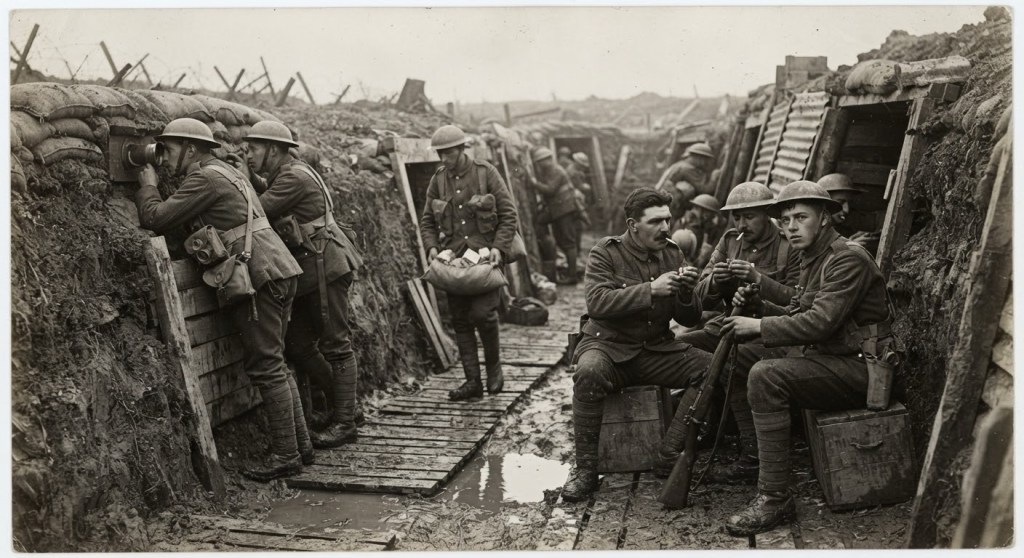
When World War I began in Europe in 1914, Roosevelt strongly favored American preparedness.
He became increasingly critical of President Woodrow Wilson’s policy of neutrality.
Roosevelt believed Germany posed a serious threat and argued that the United States should prepare for possible war.
When America eventually entered the war in 1917, Roosevelt wanted to serve.
His four sons entered military service.
His youngest son, Quentin Roosevelt, became a military aviator.
Quentin was killed in aerial combat in France in July 1918.
Roosevelt was devastated.
Chapter 33: The Final Years
Roosevelt’s health declined during his final years.
The old injuries and illnesses he had endured throughout his life increasingly affected him.
Nevertheless, he continued writing and speaking.
He remained involved in national politics and continued to debate the direction of the United States.
Roosevelt died in his sleep at Sagamore Hill, his home in Oyster Bay, New York, on January 6, 1919.
He was 60 years old.
Vice President Thomas Marshall reportedly summarized the moment by saying:
“Death had to take Roosevelt sleeping, for if he had been awake, there would have been a fight.”
Chapter 34: Theodore Roosevelt’s Family
Roosevelt married twice.
His first wife, Alice Hathaway Lee, died in 1884.
Later that year, he married his childhood friend Edith Kermit Carow.
They had five children together:
- Theodore Roosevelt Jr.
- Kermit Roosevelt
- Ethel Roosevelt
- Archibald Roosevelt
- Quentin Roosevelt
Roosevelt also maintained a close relationship with his daughter from his first marriage, Alice Roosevelt Longworth.
Alice became one of the most famous political personalities of Washington society.
The Roosevelt children were often photographed and discussed publicly, contributing to the emergence of the modern political family in American culture.
Chapter 35: Theodore Roosevelt and the Progressive Era
Roosevelt’s presidency occurred during the Progressive Era, a period when Americans increasingly demanded reforms to address the problems of industrial society.
Progressives were concerned about:
- Political corruption
- Unsafe working conditions
- Child labor
- Corporate monopolies
- Poor housing
- Urban poverty
- Environmental destruction
- Government inefficiency
Roosevelt did not agree with every Progressive reform, and the Progressive movement itself contained many competing ideas.
Nevertheless, his presidency helped bring reform politics into the center of national government.
Chapter 36: The Meaning of the “Square Deal”
The phrase Square Deal became a shorthand description of Roosevelt’s domestic philosophy.
He argued that government should provide a fair opportunity for different interests.
He did not believe that every person or corporation should receive identical treatment.
Rather, he believed the federal government should establish rules and enforce them.
This philosophy represented a significant change in the relationship between the federal government and the economy.
The government was becoming more involved in regulating large corporations and protecting consumers.
Chapter 37: Roosevelt and Conservation
Roosevelt’s conservation achievements deserve particular attention.
During his administration, millions of acres of federal land received new protections or management.
He established numerous national monuments using the Antiquities Act of 1906.
Among the most famous places associated with his conservation legacy is the Grand Canyon.
Roosevelt visited the Grand Canyon and strongly advocated preserving it.
His conservation philosophy influenced later presidents and helped establish the idea that America’s natural heritage belonged to future generations.
Chapter 38: Roosevelt’s Contradictions
Theodore Roosevelt’s life cannot easily be reduced to a simple heroic story.
He could be compassionate and aggressive.
He promoted peace while emphasizing military strength.
He supported government regulation while distrusting excessive government bureaucracy.
He championed conservation while personally enjoying hunting.
He advocated national unity while holding racial and imperial views that are deeply problematic by modern standards.
He could work with political opponents one day and fiercely attack them the next.
These contradictions are important because they help explain why Roosevelt remains such a complicated historical figure.
Chapter 39: Roosevelt’s View of Leadership
Roosevelt believed strongly in personal responsibility.
He admired courage.
He believed people should accept challenges rather than avoid them.
His famous phrase “the strenuous life” summarized much of his philosophy.
He believed Americans should remain active, disciplined, ambitious, and willing to work for worthwhile goals.
This philosophy shaped his personal life as much as his political career.
Whether riding horses, exploring wilderness, leading soldiers, negotiating treaties, campaigning for president, or writing books, Roosevelt approached life with remarkable energy.
Chapter 40: Theodore Roosevelt’s America
Roosevelt lived during a turning point in American history.
When he was born in 1858:
- The Civil War had not yet begun.
- The United States was still largely agricultural.
- The automobile was not yet part of everyday life.
- Aviation was decades away.
- The telephone was still a new invention.
- The United States had limited influence in world affairs.
By the time he died in 1919:
- The United States had become a major industrial power.
- America possessed a powerful navy.
- The federal government had dramatically expanded its regulatory role.
- The Panama Canal had opened.
- Conservation had become a national policy.
- The United States had become a major participant in world affairs.
- America had fought in World War I.
Roosevelt’s lifetime therefore coincided with America’s transformation into a modern global power.
Chapter 41: Roosevelt’s Lasting Legacy
More than a century after his death, Theodore Roosevelt remains one of the most recognizable presidents in American history.
His name can be found on:
- National parks
- Historic sites
- Schools
- Streets
- Memorials
- Books
- Museums
- The Theodore Roosevelt National Park
- The Roosevelt Memorial on Mount Rushmore
His presidency helped redefine the possibilities of executive leadership.
His conservation policies influenced America’s national parks and public lands.
His diplomatic efforts demonstrated the growing international role of the United States.
His reforms contributed to the development of federal regulation of business and consumer products.
At the same time, his imperial policies, racial views, and some decisions remain subjects of historical debate.
Conclusion: The Man and the Era
Theodore Roosevelt was a product of nineteenth-century America who helped create twentieth-century America.
He experienced enormous personal tragedy but rebuilt his life through physical activity, scholarship, public service, and political ambition.
He became a cowboy, historian, police commissioner, governor, soldier, vice president, president, explorer, author, reformer, and presidential candidate.
Few individuals moved through so many different worlds.
Roosevelt’s greatest historical importance may not lie in any single policy or achievement.
It lies in the way his life reflected the transformation of the United States itself.
He came of age in the aftermath of the Civil War and died just after World War I. Between those events, America changed from a continental nation still developing its institutions into an industrial and international power.
Roosevelt believed that America should meet the challenges of that changing world with energy and confidence.
Whether examining his presidency, his conservation work, his military career, his foreign policy, or his complicated views on race and empire, Theodore Roosevelt remains a figure whose life reveals the ambitions, contradictions, opportunities, and conflicts of the United States at the dawn of the modern era.
His story is ultimately the story of an America in transition—and of a man who was determined not merely to witness that transformation, but to help shape it.


Leave a comment